Motorized and Balloon Dynamic Satiety Stimulator
This invention discloses systems and methods for dynamically stimulating satiety by temporarily occupying volume within a subject’s stomach to reduce food intake and promote weight loss. Unlike conventional intragastric balloon devices that remain at a fixed volume, the disclosed system expands before or during feeding and then contracts afterwards to reduce physiological accommodation. By providing dynamic gastric volume occupancy, this technology is designed to support long-term weight loss outcomes.
Researchers
-
feeding behavior change induced by dynamic occupational satiety stimulator
United States of America | Pending
Figures
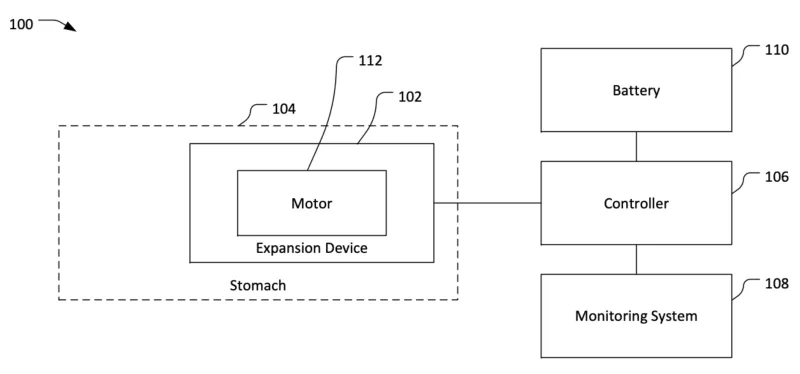
Block diagram of an example dynamic satiety stimulation system including a mechanical gastric expansion device.
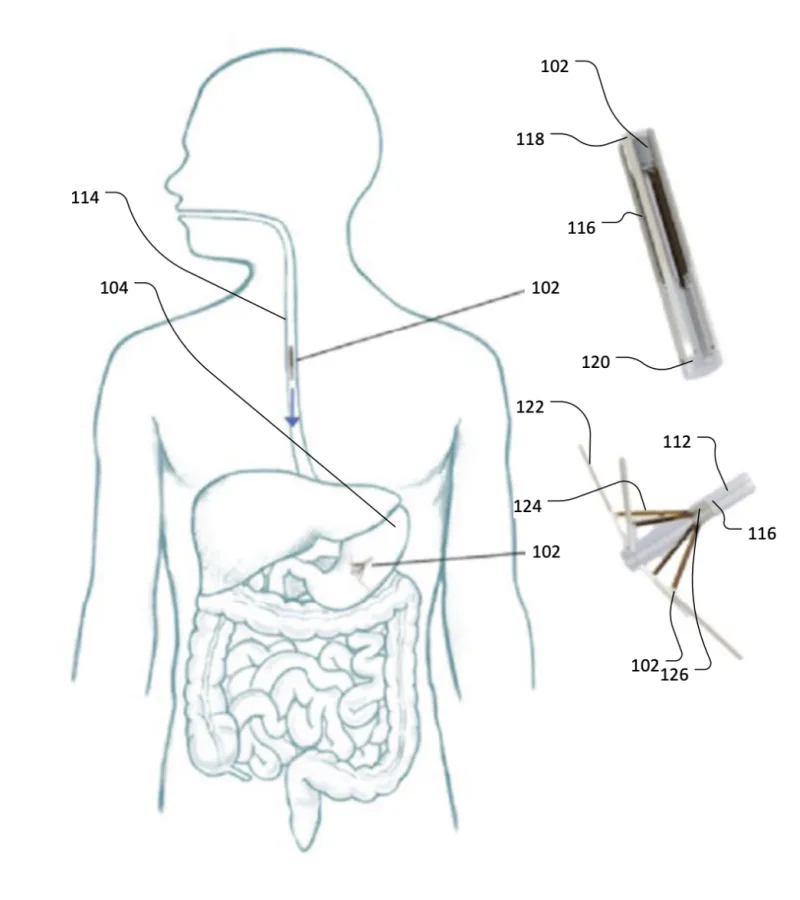
Schematic diagram illustrating the implantation of the example system of Figure 1 within a subject’s stomach.
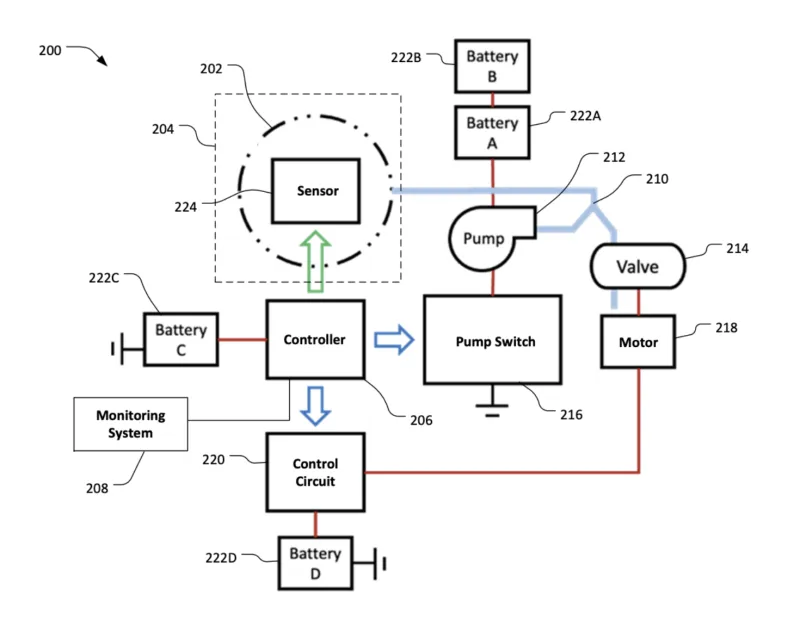
Block diagram of a second example system including an inflatable balloon gastric volume-occupying device.
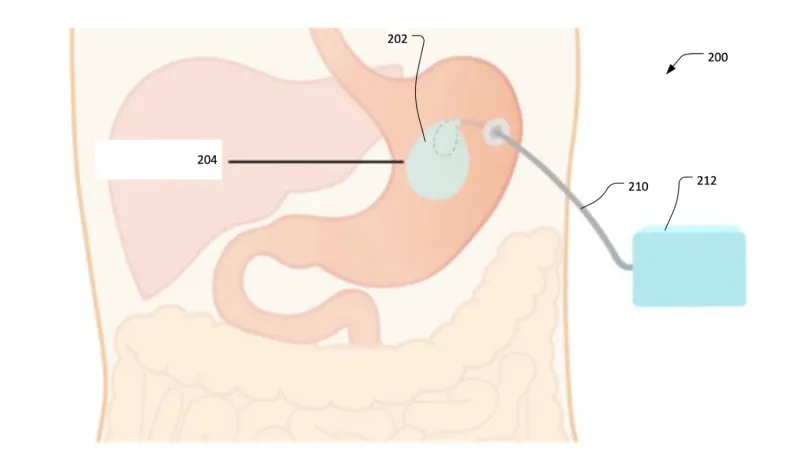
Schematic diagram illustrating the implantation of the example system of Figure 3 within a subject’s stomach.
Technology
The technology consists of an implantable gastric volume-occupying devices that can be surgically or endoscopically inserted within the stomach and manipulated by the patient using an external controller. Before and during meals, the device expands to occupy stomach volume and stimulate satiety, thereby reducing food intake. After meals, the device contracts to minimize gastric accommodation and thereby helps to preserve long-term efficacy of the system to avoid continuous stretching the gastric tissue. In the motorized embodiment, the external controller operates a motor to extend or contract the devices' arms. In the balloon embodiment, a pump and valve inflate the balloon. The controller can be integrated with a monitoring system for measuring relevant signals such as pressure and volume of the subject’s stomach, hormone levels, and bio signals in order to independently determine when and how much the device should be expanded or contracted.
Problem Addressed
Obesity is a global health concern with a rising prevalence, yet conventional interventions require tradeoffs between efficacy, invasiveness, and long-term durability. Traditional lifestyle interventions such as diet and exercise have been shown to frequently result in limited long-term weight loss and complete weight regain within 3-5 years. Bariatric surgeries such as gastric bypass have been shown to be effective in achieving substantial weight reduction over longer periods of time. However, these options are limited in application for patient care by their invasive nature and potential for severe complications. Less invasive alternatives such as pharmacological therapies and endoscopic interventions generally provide lower weight-loss efficacy than non-surgical approaches. Conventional intragastric balloons are limited because their fixed volume can lead to gastric accommodation, reducing satiety stimulation over time and contributing to weight-loss plateaus.
This invention addresses these shortcomings through the creation of two dynamic satiety stimulation systems that each dynamically expand and contract within the stomach. By delivering satiety stimulation during meals while reducing accommodation after meals, the technology is designed to maintain effectiveness over extended treatment periods and improve long-term weight-loss outcomes.
Advantages
Dynamic system retains the benefits of occupational satiety stimulation while reducing loss of stimulation over time due to accommodation.
Mimics the transient feeling of fullness associated with eating rather than providing constant stimulation.
Expansion and contraction schedules can be customized based on meal timing or physiological signals.
Compatible with monitoring systems that can automatically optimize therapy based on real-time physiological measurements.
License this technology
Interested in this technology? Connect with our experienced licensing team to initiate the process.
Sign up for technology updates
Sign up now to receive the latest updates on cutting-edge technologies and innovations.