Fenestration Alignment Program
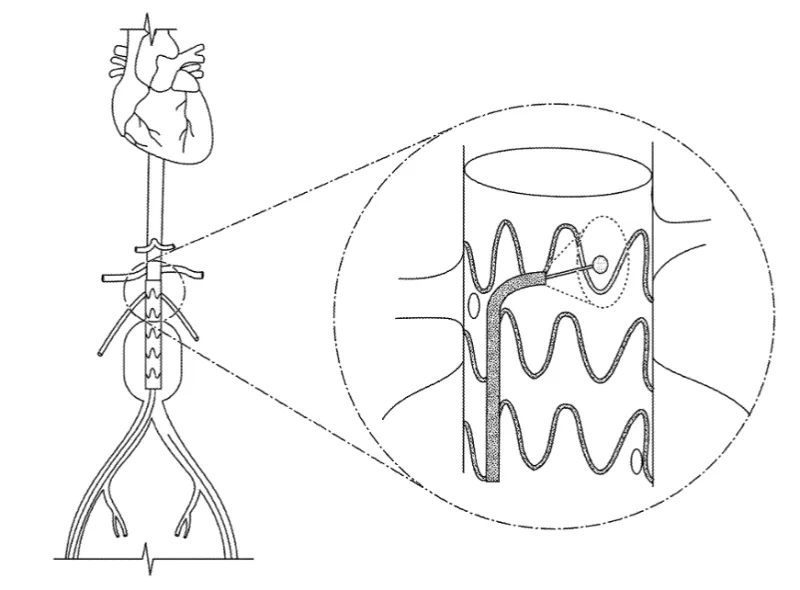
This technology, dubbed FENFIT, is an automated surgical-planning system for determining patient-specific fenestration alignments on commercially available endograft implants. Using preoperative patient-anatomy imaging and a selected graft template, the program identifies a fenestration configuration that avoids collisions with graft structural features, generates modification instruction and a 3D visualization for clinical review, and may be incorporated into systems that physically modify the implant before or during a procedure. Unlike current manual planning, which relies on hand calculations and trial-and-error positioning to avoid structural collisions, the automated approach reduces planning time and opportunities for human error.
Researchers
-
device and method for fenestration alignment¿
European Patent Convention | Published application -
device and method for fenestration alignment
United States of America | Published application
Figures
Technology
First, the program automatically calculates the fenestration coordinates and dimensions from preoperative imaging of the patient-specific implantation site and generates a 2D representation known as a fenestration mask. After the user selects a particular off-the-shelf endograft, the program renders a graft mask, or 2D representation, highlighting structural components, including stent struts. The fenestration mask is then successively convolved with the graft mask in both the longitudinal and circumferential directions until a valid fit, in which no proposed fenestration overlaps with graft structural components, is identified. The validated fenestration plan is mapped onto a 3D endograft model, which can be displayed in relation to the patient’s anatomy and reviewed by the surgeon. Finally, fenestrations are marked or created on the physical endograft using the coordinates from the fenestration plan. In an automated configuration, a graft may be positioned on a rotating rod or mandrel, while motor-driven positioning components move a marking, cutting, or cauterizing tool to each designated coordinate.
Problem Addressed
Complex aortic aneurysms that extend to or above the renal and visceral branch arteries often lack sufficient healthy aorta for a conventional endograft to achieve proximal seal without obstructing blood flow to the critical branch vessels. Fenestrated endografts can preserve perfusion through these vessels, but manufacturer-produced, patient-specific fenestrated endographs can require weeks to obtain and therefore are not suitable for urgent interventions. Customizing an off-the-shelf endograft instead requires surgeons to manually translate CT-derived vessel locations into fenestration positions, often through trial and error to avoid non-modifiable stent struts. The present technology automates the identification of valid, patient-specific fenestration alignments on commercial graft templates and produces modification instructions and a 3D visualization, reducing planning burden and supporting potential automated graft fenestration.
Advantages
- Substantially reduces planning time: In a pilot retrospective clinical study, FENFIT reduced average fenestration-planning time by approximately 62-fold, from about 30 minutes to 32 seconds per case, relative to physician manual planning.
- Accommodates multiple graft geometries: The technology can support patient-specific fenestrated implants with either isodiametric or heterodimeric (tapered) geometries. For tapered grafts, the program can divide the graft into regions and seamlessly apply the appropriate coordinate system for each region during the mask-alignment process.
- Improves design review and clinical communication: A visual interface displaying the patient-specific graft design in relation to the underlying anatomy enables physicians to review, reference, and discuss the fenestration design.
- Applicable across fenestrated implant types: The underlying planning method can be adapted to other fenestrated medical implants, including stents, vascular grafts, prosthetic valves, autologous, allogeneic, xenogeneic, synthetic, and hybrid stent-graft constructs.
Publications
Dillon, Tom M., Patric Liang, Marc L. Schermerhorn, and Ellen T. Roche. “A Computational Program for Automated Surgical Planning of Fenestrated Endovascular Repair.” Communications Engineering 2, no. 1 (2023): 37.
License this technology
Interested in this technology? Connect with our experienced licensing team to initiate the process.
Sign up for technology updates
Sign up now to receive the latest updates on cutting-edge technologies and innovations.